
Stories
World Children’s Day: Finland advances the rights of children with disabilities in peace and conflict settings
As conflicts continue to affect millions of children worldwide, children with disabilities often face some of the biggest barriers to education, healthcare and humanitarian assistance. On Children’s Day, it is important to recognize that children’s rights are universal only if they extend equally to every child, including those living with disabilities in situations of conflict and crisis.
Conflicts leave many children with life-altering injuries, resulting in permanent disabilities and long-term support needs. Children with disabilities are often disproportionately affected by conflict and disaster. Schools and shelters may be physically inaccessible, evacuation information is often unavailable in accessible formats, and humanitarian assistance can be difficult to reach.
A discussion in Copenhagen with Mrs. Suzanne Innes-Stubb, Patron of UNICEF Finland and Spouse of the President of the Republic of Finland, brought together representatives of UN entities and Ambassadors accredited to Finland to discuss the rights of children with disabilities in conflict and humanitarian settings.
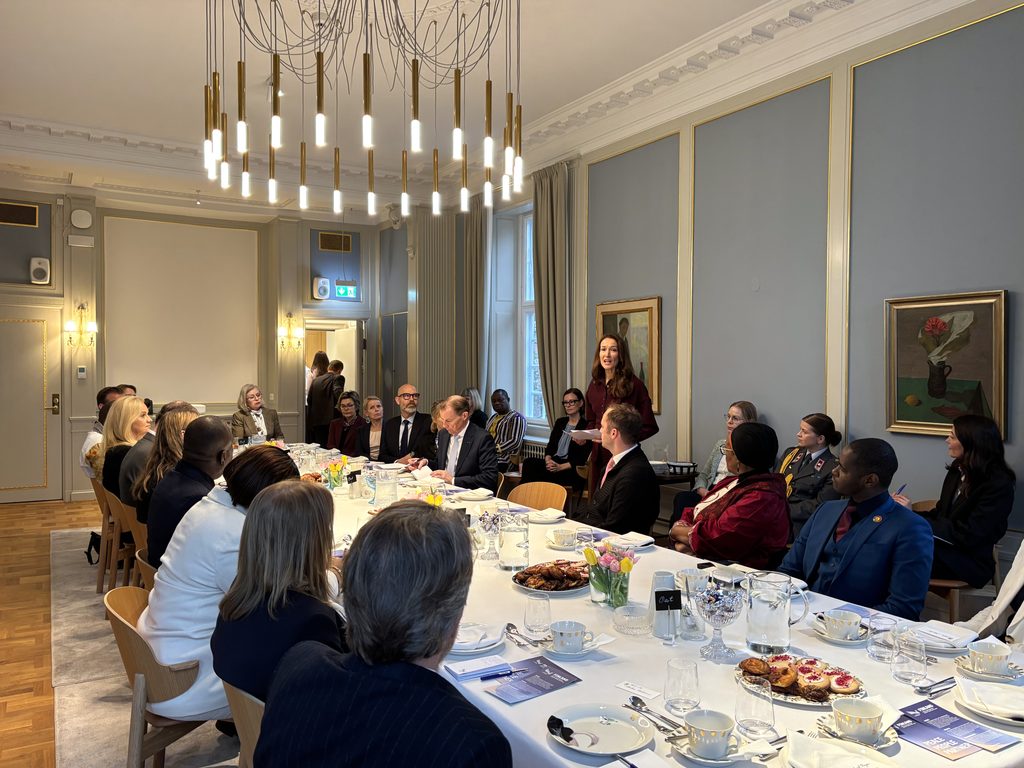
the rights, inclusion and participation of children with disabilities, particularly in humanitarian crises.
From protection to participation
The report on Children and Armed Conflict published by the UN Secretary-General in June 2026 shows that an unprecedented number of children were subjected to violations by parties to armed conflict. In 2025 the UN verified 38,558 grave violations against children. These figures serve as a stark reminder that children continue to bear the heaviest burden of conflict, with the most vulnerable often facing the greatest risks.
Health, education and social protection systems must work together to ensure that children are not only reached but truly included. Sustainable and inclusive solutions can only be achieved when persons with disabilities and their representative organisations are actively involved in decision-making, implementation and monitoring. Children with disabilities should not be viewed solely as beneficiaries of protection. Their perspectives and experiences can help shape more inclusive peace building and recovery efforts.
As part of these efforts, particular attention must be paid to the challenges faced by girls with disabilities, who are often exposed to multiple and intersecting forms of discrimination, violence and exclusion. Equally, digital technologies and assistive solutions offer significant opportunities to improve access to education, healthcare and humanitarian assistance, provided that accessibility and inclusion are integrated from the outset.
Participants noted that disability inclusion should be reflected throughout the UN Security Council’s work, including in the design of peace operations, protection mandates and discussions concerning children affected by armed conflict. Peace processes and recovery efforts are more sustainable when they are inclusive and take into account the needs and perspectives of all members of society, including persons with disabilities.
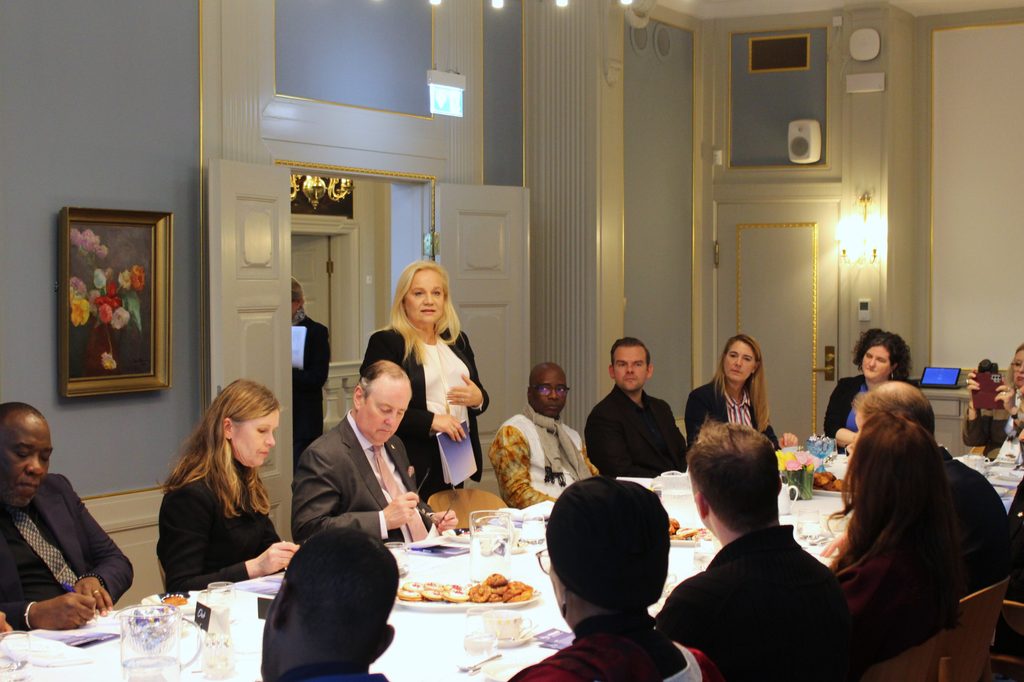
Hosted by Finland’s Ambassador to Denmark, Ms. Lotta Nymann-Lindegren, the event featured contributions from Ms. Marie-Louise Koch Wegter of the Danish Ministry of Foreign Affairs and Ambassador Ms. Satu Suikkari-Kleven, who presented Finland’s priorities for its candidature for a non-permanent seat on the UN Security Council for the period 2029–2030.
Through its partnership with UNICEF and broader international engagement, Finland remains committed to advancing disability inclusion and ensuring that the rights and voices of children with disabilities are reflected in efforts to build more peaceful, resilient and inclusive societies. Advancing the rights, participation and inclusion of persons with disabilities, including children, is a key priority of Finland’s candidacy for the UN Security Council and of its broader engagement within the United Nations.
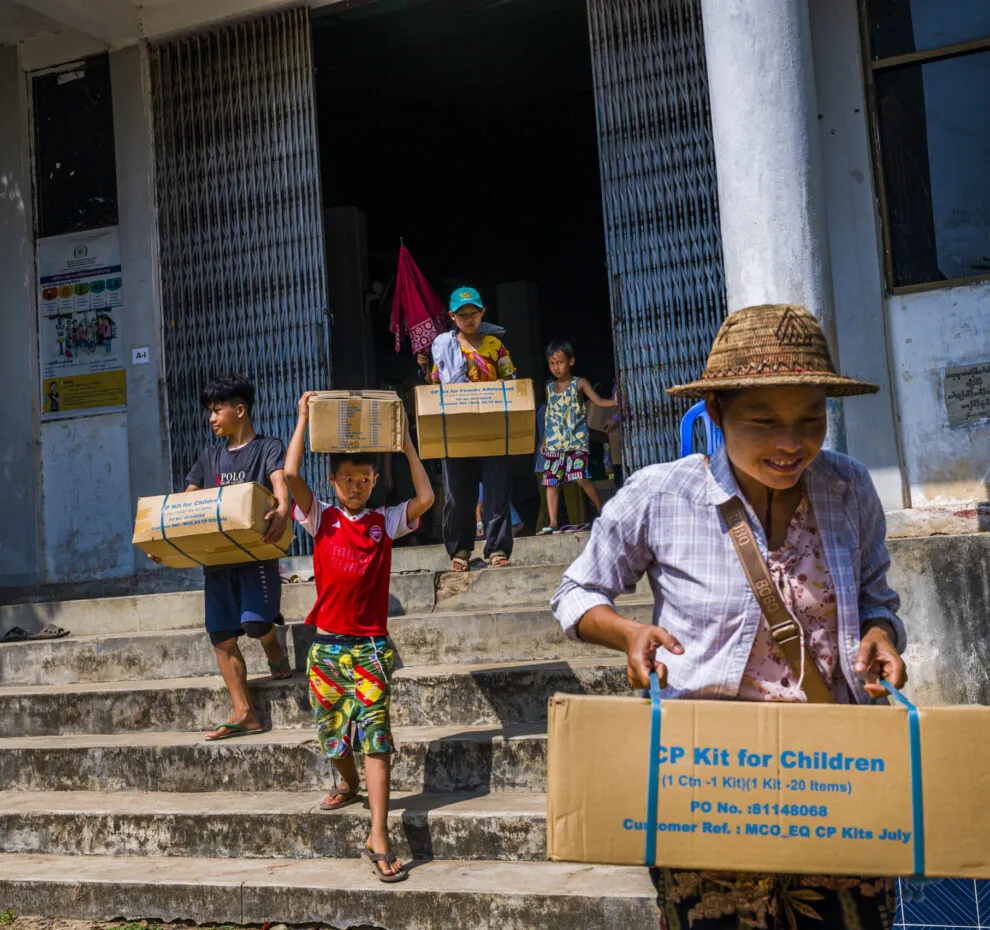
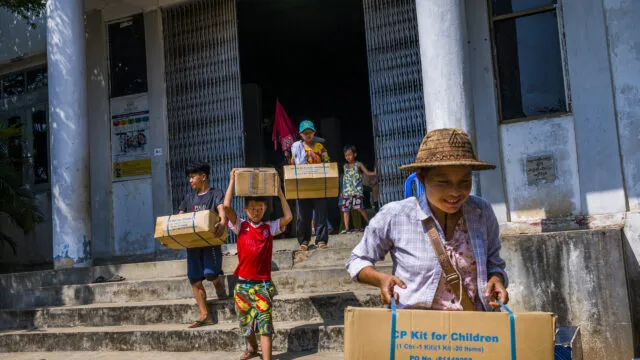
Header photo: ©UNICEF. Internally displaced children and their families carry child protection kits received on 20 May 2026 during a distribution at a church in southeast Myanmar, as part of UNICEF’s Child Protection programme. The child protection kits contain age- and gender-specific items including clothing, slippers, hygiene supplies, toys, drawing materials, sleeping mats, raincoats, solar lamps and menstrual hygiene products.
Stories and News
Updates on current news, stories and Finland’s engagement in the United Nations and the world.

Orange the World: Finland Committed to Ending Gender-Based Violence
World Children’s Day: Finland advances the rights of children with disabilities in peace and conflict settings
Stock exchanges around the world to ring the bell for children on World Children's Day (external link)
Foreign Minister Valtonen to attend annual Nordic-African Foreign Ministers’ Meeting in Oslo (external link)