 © MFA Finland
Speeches
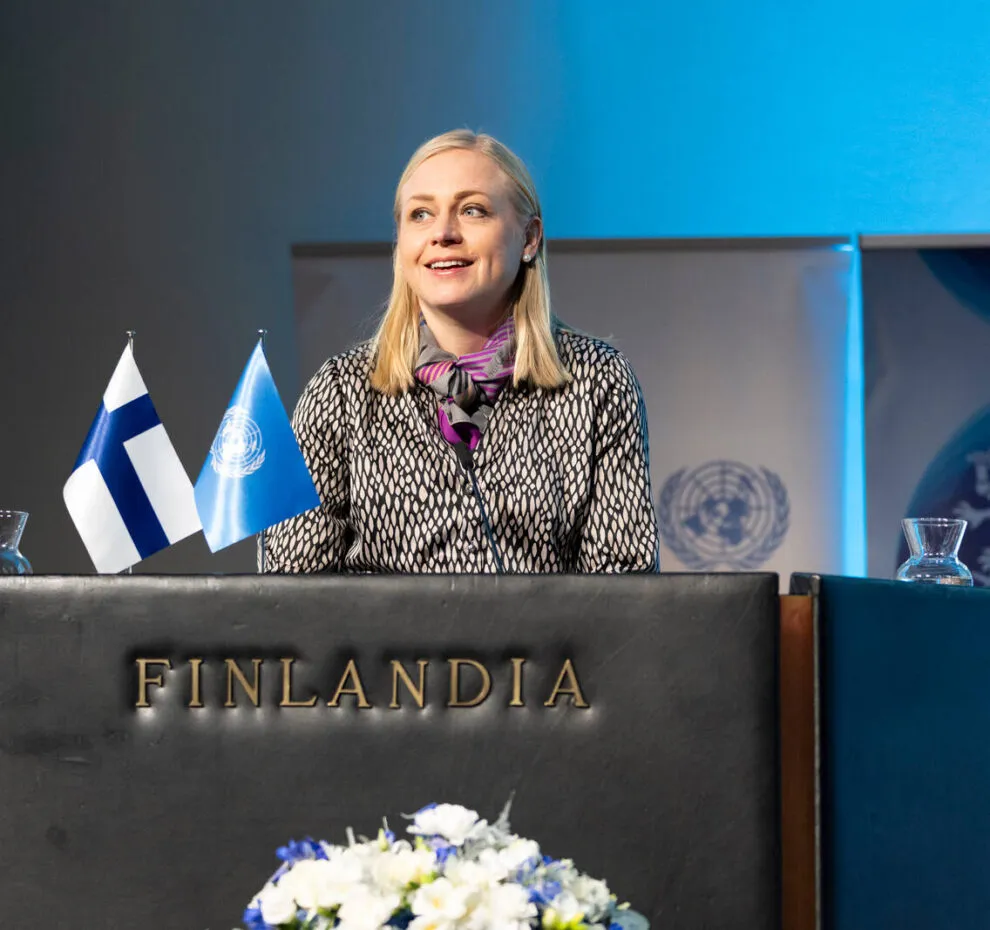
Minister for Foreign Affairs Elina Valtonen at the Seminar on Protecting Civilians on the Ground December 2025
Opening statement by the Minister for Foreign Affairs of Finland Ms. Elina Valtonen at seminar “United Nations in Action – Protecting Civilians on the Ground” on 12 December 2025.
Excellencies, Ladies and Gentlemen, Dear Friends of the United Nations,
Thank you for the opportunity to speak to you today. In a way, I am ending my week as I started it. On Monday I had the privilege of briefing the UN Security Council on Finland’s chairpersonship of the OSCE. Over the past year our focus has been on promoting – and making active – the principles of the Helsinki Final Act, which mirror the UN Charter, especially:
• respect for fundamental human rights;
• sovereign equality;
• respect for international law; and
• the prohibition of the use of force in international relations.
These principles form the bedrock on which the United Nations was founded 80 years ago. Their aim: to save succeeding generations from the devastation of war.
These principles have not lost their relevance.
Making sure that they form the basis of our current international reality is a task Finland is wholeheartedly committed to.
Today, we stand at crossroads again and it is up to us to choose the path forward.
Finland stands with the vast global majority that believes in the power of effective multilateralism. And at the heart of this commitment are the shared values enshrined in the United Nations and its Charter.
Dear friends,
These values are not just abstract concepts heard in speeches in grand locations such as this. Rather, they have been the basis of groundbreaking work to make this world a better place.
In addition to the promotion of peace, the UN has distributed life-saving humanitarian aid, implemented disease-eradicating vaccination campaigns and the adopted a robust framework of treaties designed to secure individual rights and freedoms.
In short, the UN has made life better, fostered peace and advanced human dignity in all the corners of the world.
Nevertheless, it is clear that the UN faces growing challenges, most notably in its central task to prevent war and conflict.
There are more armed conflicts today than at any time after the Second World War. Russia’s war of aggression against Ukraine is a blatant violation of the UN Charter. The fact that Russia is a permanent member of the Security Council underlines the need for Security Council reform.
At the same time, civilians are paying the ultimate price. Reports of grave violations of international law continue to come in from Ukraine, Gaza, Sudan, Myanmar, the Republic of the Congo, and elsewhere.
Therefore the question we today face, is how can we ensure that the UN Charter once again becomes a source of hope? A promise of a better world? My answer is to focus on action; by demonstrating that even in times of uncertainty, we can deliver results that matter to people’s lives.
Today, therefore, our focus is on action – on what has been possible, even in some of the world’s most difficult environments. We will hear firsthand accounts of practical experiences and lessons learned from operations and missions mandated by the Security Council.
And while attention often centers on the Security Council’s limitations [notably on the problematic effects of the use of veto] it is important to recognize that the Council continues to address a great number of situations across the globe.
And these decisions translate into daily actions that protect civilians and safeguard lives, reaffirming the importance of multilateral engagement and collective responsibility.
Ladies and gentlemen,
As we reflect on today’s evolving landscape, I want to share a few thoughts that speak directly to our theme—the protection of civilians.
Firstly, the prevention of conflicts and serious human rights violations is the best way to protect civilians. As we shape the United Nations of tomorrow, we must focus on preventative measures – from safeguarding human rights and promoting inclusive development to advancing peace mediation and deploying the tools of preventive diplomacy. These efforts save lives, strengthen stability, and build trust.
Second, the UN must be at the very center of global peace efforts. Its vast experience, expertise, and unparalleled knowledge are essential to ensuring that responses and operations are both professional and effective. No other organization has the same legitimacy, capacity or global reach.
Third, in all conflicts, irrespective of where they occur, we must call out serious violations of international law and demand accountability.
As we enter the next decade, we owe it to ourselves and the United Nations to make it stronger, more effective, and better equipped for the challenges of our time.
We must support the United Nations in its efforts for reform to ensure that we have an organization that is both relevant and capable to deliver on its promise of peace, security, and human dignity for all.
Ladies and gentlemen,
Alongside the UN’s 80th anniversary, this year marks 70 years since Finland joined the organization. Ever since the beginning, Finland has been an active and supportive member of the organization. Over the decades, Finland has contributed significantly to UN peacekeeping, mediation, sustainable development, humanitarian initiatives as well as human rights, gender equality and justice.
Finland has served in the Security Council twice and is willing to do so again. Finland is a candidate to the Council for 2029-2030. Should we be elected, Finland pledges to be a principled and pragmatic partner for peace. A partner with an open door, willing to listen to everyone, including those who do not have a seat at the horseshoe table [including especially those whose voices often remain unheard.]
Ladies and gentlemen,
Finland has learned firsthand that peace, reconciliation, and the freedom to choose one’s path are the foundations for people and nations to thrive.
This is also the promise of the United Nations. From its inception, the UN was meant to serve the people, not merely their governments. The individual must remain in the center of the UN: every person should feel that their voice counts and that they have the freedom to choose their own path.
When individuals and nations feel that they have ownership, the future is not something to fear—it is something we can shape, together.
I wish you a fruitful seminar today. Thank you.
Stories and News
Updates on current news, stories and Finland’s engagement in the United Nations and the world.

Nordic Statement at the General Assembly Veto Debate (external link)
Finland advances UN reform and multilateral cooperation at High-Level Week
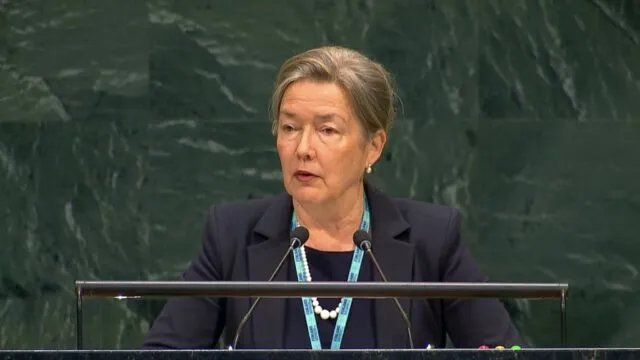
Statement by H.E. Ms. Elina Kalkku, Permanent Representative of Finland on behalf of the Nordic countries in GA Veto debate
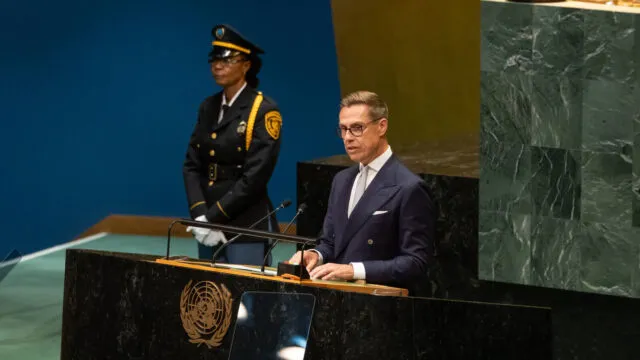
President Alexander Stubb at the General Debate of the 81st Session of the UN General Assembly 2026